
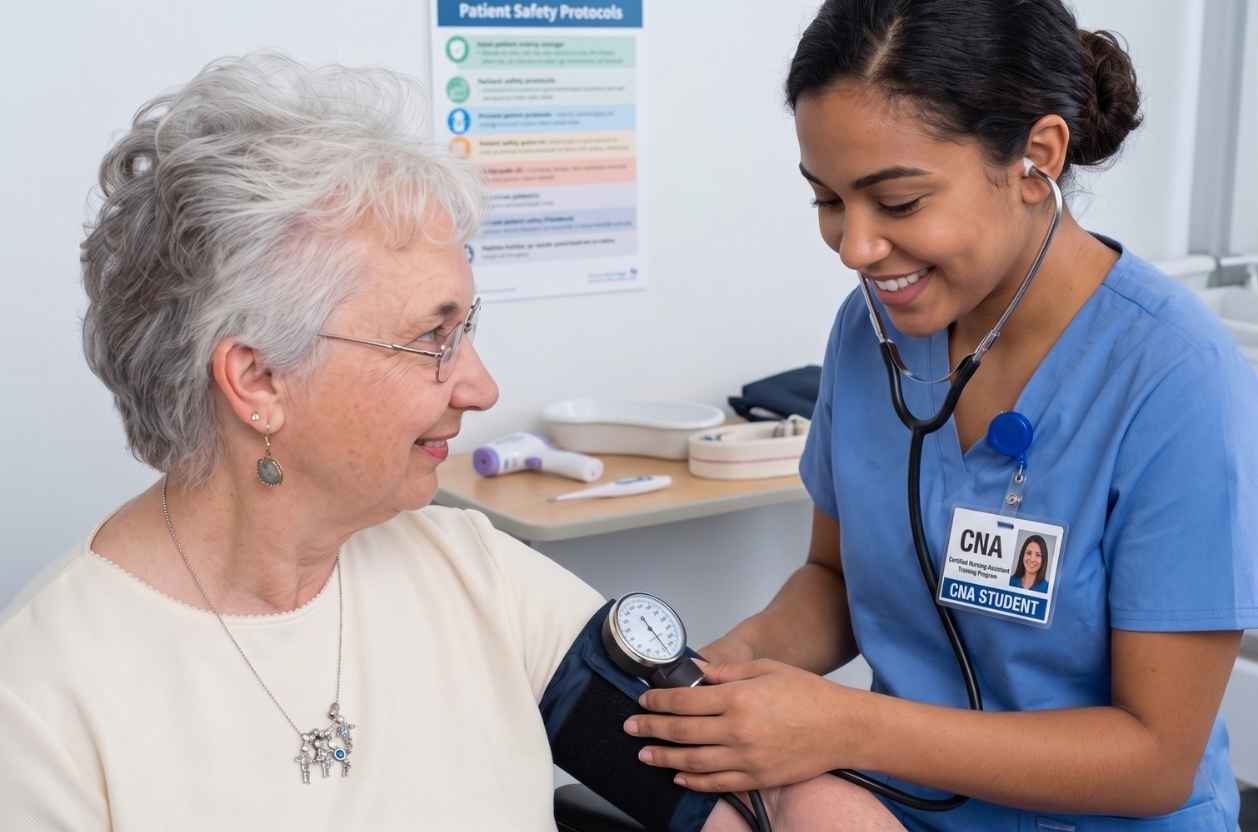
Certified Nursing Assistant (CNA) Program Guide & Board Exam Mastery
Comprehensive clinical curriculum, verified practice question banks, procedural skills rubrics, and authentic timed board simulations calibrated to national standards.
Exam Questions
60 to 70 Scored Multiple-Choice Questions
Time Limit
90 Minutes
Passing Target
70% – 80% (State Scaled Passing Score)
Access Tier
Free Instant Access
What is a Certified Nursing Assistant?
Healthcare career overview, clinical scope of practice, and professional expectations
A Certified Nursing Assistant (CNA) is a vital frontline healthcare professional who works directly with patients and residents to provide essential daily care, monitoring, and emotional support. Operating under the direct supervision of Registered Nurses (RNs) and Licensed Practical Nurses (LPNs), CNAs serve as the primary observational eyes and ears of the healthcare team. CNAs assist individuals who are ill, recovering from surgery, or experiencing aging-related cognitive or physical decline with everyday activities—such as bathing, dressing, eating, ambulating, and maintaining personal hygiene. Because CNAs spend more one-on-one time with individuals than almost any other healthcare staff member, their prompt recognition of vital sign changes, skin breakdown, or mood shifts often prevents critical complications.
Who This Certification Program Is For
Core Clinical Responsibilities & Daily Scope
- 1 Measuring and documenting vital signs (blood pressure, radial pulse, respirations, temperature, and pulse oximetry)
- 2 Assisting residents with Activities of Daily Living (ADLs) including perineal care, bathing, oral hygiene, and dressing
- 3 Safe patient ambulation and transfer techniques using gait belts, mechanical lifts, and wheelchair safety protocols
- 4 Monitoring and accurately recording intake and output (fluid balance, meal consumption percentages, and urinary output)
- 5 Maintaining zero-tolerance infection control standards (CDC standard precautions, hand hygiene, and PPE donning/doffing)
- 6 Reporting acute changes in resident cognition, skin integrity (pressure injury prevention), and comfort to the supervising nurse
Official Examination Format & Scoring Blueprint
Standardized test specifications, domain weight distributions, and passing thresholds
Test Format
Computer-Based Test (CBT) Knowledge Exam + In-Person Clinical Skills Evaluation
Question Count & Time
60 to 70 Scored Multiple-Choice Questions (90 Minutes)
Passing Score Standard
70% – 80% (State Scaled Passing Score)
| Knowledge Domain | Weight | Questions | Key Competencies Evaluated |
|---|---|---|---|
| Physical Care Skills & ADLs | 40% | 24–28 Questions | Hygiene, dressing, grooming, nutrition, hydration, elimination, and skin integrity maintenance. |
| Safety & Emergency Procedures | 22% | 13–16 Questions | Fall prevention, body mechanics, fire safety (RACE/PASS), Heimlich maneuver, and bed rail safety. |
| Infection Control & Standard Precautions | 18% | 11–13 Questions | Hand hygiene protocols, chain of infection, PPE donning/doffing, and transmission-based precautions. |
| Psychosocial Care & Communication | 12% | 7–9 Questions | Resident emotional support, dementia/Alzheimer care strategies, and therapeutic communication. |
| Legal, Ethical & Role Boundaries | 8% | 5–6 Questions | Resident Bill of Rights, HIPAA privacy, reporting mandatory abuse/neglect, and delegated scope limits. |
📋 High-Yield Clinical Skills Demonstration Checklist
1. Hand Hygiene (Soap & Water)
Critical Step Protocol: Do not touch sink with uniform; lather for at least 20 seconds; clean fingernails and wrists; dry with clean paper towels and turn off faucet with dry barrier.
2. Radial Pulse & Respiration Counting
Critical Step Protocol: Count pulse for 60 full seconds; measure respirations immediately without alerting the resident that their breathing is being counted.
3. Safe Resident Transfer with Gait Belt
Critical Step Protocol: Apply belt snuggly over clothing; ensure resident has non-skid footwear; lock wheelchair and bed brakes before initiating transfer.
4. Donning & Doffing PPE (Gown & Gloves)
Critical Step Protocol: Don gown then gloves over cuffs; remove gloves first by turning inside out; unfasten gown at neck and waist without touching contaminated front.
5. Catheter Care for Female/Male Resident
Critical Step Protocol: Wash with soap and water away from urinary meatus down the drainage tube at least 4 inches; use clean area of cloth for each stroke.
6. Passive Range of Motion (PROM) Exercises
Critical Step Protocol: Support limb at both joints; move slowly and gently; immediately stop if resident reports pain or resistance.
What Our Study Hub Offers for Guaranteed First-Time Board Success
1,000+ Board-Standard Questions
Comprehensive question bank with detailed clinical rationales explaining every correct and incorrect answer distractor.
22 Procedural Skills Rubrics
Step-by-step physical skills checklists highlighting zero-tolerance critical safety steps evaluated by board proctors.
Clinical Math & Fluid Balance Lab
Hands-on interactive simulator for metric conversions, fluid intake/output calculations, and resident nutrition tracking.
Spaced Repetition Flashcards
Active recall flashcard decks covering clinical abbreviations, vital sign normal ranges, and medical terminology.
100% Free Guest Exploration
Take instant diagnostic practice tests immediately without requiring payment or account registration.
Clinical Practice Environments & Career Settings
Where certified Certified Nursing Assistant professionals practice nationwide
- 🏥 Skilled Nursing Facilities & Long-Term Care Centers
- 🏥 Acute Care Hospitals & Specialized Medical-Surgical Units
- 🏥 Assisted Living Communities & Memory Care Facilities
- 🏥 Home Health Agencies & Private Duty Patient Care
- 🏥 Outpatient Surgery Centers & Hospice Care Facilities
Frequently Asked Questions (FAQ)
Authoritative answers on Certified Nursing Assistant state testing, passing scores, and examination rules