
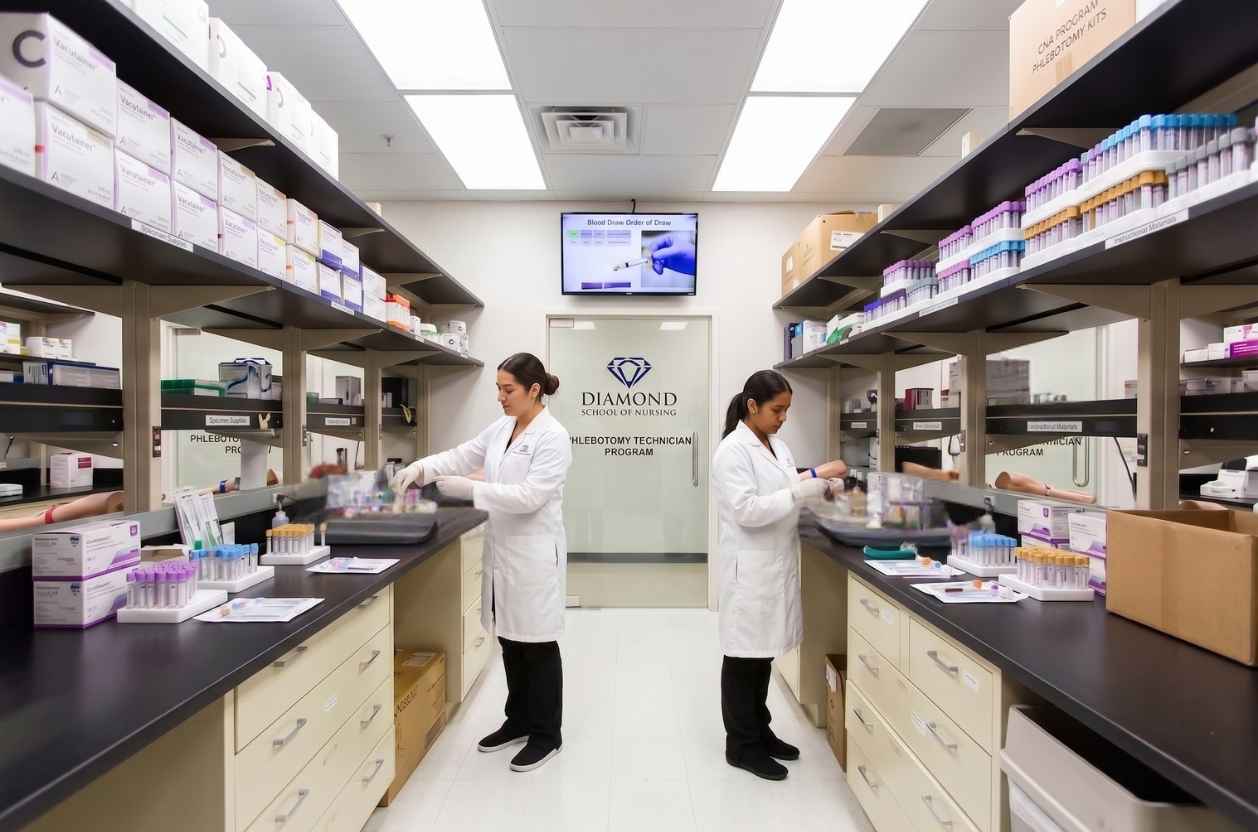
Phlebotomy Technician (CPT) Program Guide & Board Exam Mastery
Master venipuncture techniques, specimen handling protocols, infection control, and national NHA/AMCA board examinations with verified clinical practice tests.
Exam Questions
100 to 120 Multiple-Choice Questions
Time Limit
120 Minutes (2 Hours)
Passing Target
Scaled Score of 390/500 (NHA) or 70%+ depending on credentialing agency
Access Tier
Free Instant Access
What is a Phlebotomy Technician?
Healthcare career overview, clinical scope of practice, and professional expectations
A Certified Phlebotomy Technician (CPT) is a specialized clinical laboratory professional trained to perform safe, sterile, and patient-centered blood collections for diagnostic testing, transfusions, research, and donations. Phlebotomists operate at the critical intersection of clinical medicine and laboratory pathology. Beyond needle insertion, a phlebotomist must master patient identification, vein assessment (evaluating median cubital, cephalic, and basilic veins), additive tube biochemistry, specimen handling temperatures, and emergency management of complications such as syncope (fainting) or hematomas. Precise phlebotomy technique prevents specimen hemolysis and micro-clots, directly guaranteeing diagnostic accuracy for physicians.
Who This Certification Program Is For
Core Clinical Responsibilities & Daily Scope
- 1 Confirming patient identity using two independent identifiers and obtaining informed consent
- 2 Selecting appropriate venipuncture equipment (evacuated tube systems, butterfly needles, syringes) and vein sites
- 3 Executing strict CLSI (Clinical and Laboratory Standards Institute) Order of Draw to eliminate tube cross-contamination
- 4 Applying and removing the tourniquet within the mandatory 60-second limit to prevent hemoconcentration
- 5 Immediate activation and disposal of OSHA-compliant engineered sharps safety devices
- 6 Inverting blood collection tubes gently 5 to 10 times to ensure proper mixing with anticoagulants and clot activators
- 7 Labeling tubes at the bedside in the presence of the patient immediately following venipuncture
Official Examination Format & Scoring Blueprint
Standardized test specifications, domain weight distributions, and passing thresholds
Test Format
Computer-Based Testing (CBT) covering Anatomy, Physiology, Specimen Collection, and Safety
Question Count & Time
100 to 120 Multiple-Choice Questions (120 Minutes (2 Hours))
Passing Score Standard
Scaled Score of 390/500 (NHA) or 70%+ depending on credentialing agency
| Knowledge Domain | Weight | Questions | Key Competencies Evaluated |
|---|---|---|---|
| Specimen Collection & Venipuncture Technique | 45% | 45–55 Questions | Vein selection, evacuated tube systems, butterfly needles, dermal punctures, and blood cultures. |
| Order of Draw & Additive Tube Chemistry | 20% | 20–24 Questions | CLSI sequence, anticoagulants, clot activators, and cross-contamination prevention. |
| Safety, Compliance & OSHA Regulations | 20% | 20–24 Questions | Needlestick Safety Act, biohazard sharps disposal, PPE, and standard precautions. |
| Patient Preparation & Specimen Processing | 15% | 15–18 Questions | Patient verification, fasting status, centrifugation, temperature control, and chain of custody. |
📋 High-Yield Clinical Skills Demonstration Checklist
1. Routine Evacuated Tube Venipuncture
Critical Step Protocol: Palpate vein; disinfect concentric circles; anchor vein firmly 1-2 inches below; insert bevel up at 15-30 degree angle; release tourniquet before withdrawing needle.
2. Capillary Skin Puncture (Heel/Finger)
Critical Step Protocol: Select fleshy side of middle/ring finger or lateral plantar heel for infants; wipe away first blood drop to remove interstitial tissue fluid.
3. CLSI Order of Draw Multi-Tube Inversion
Critical Step Protocol: Collect Yellow (cultures) first, followed by Light Blue, Red/SST, Green, Lavender, Gray; gently invert each tube 5-10 times without vigorous shaking.
What Our Study Hub Offers for Guaranteed First-Time Board Success
CLSI Order of Draw Interactive Drills
Interactive tube sorting drills reinforcing blood cultures, sodium citrate, serum, heparin, EDTA, and oxalate tubes.
National Board Test Simulations
Realistic timed mock exams mirroring NHA CPT, AMT RPT, and ASCP PBT examination blue-prints.
Complications & Troubleshooting Lab
Scenario-based questions covering nerve injury avoidance, hematoma response, and collapsed vein correction.
Specimen Handling & Centrifugation Guides
Master light-sensitive tests (bilirubin), chilled specimens (ammonia), and ambient temperature handling.
Free Guest Mode
Start diagnostic practice questions and order of draw flashcards without signup or payment.
Clinical Practice Environments & Career Settings
Where certified Phlebotomy Technician professionals practice nationwide
- 🏥 Hospital Phlebotomy & Central Processing Laboratories
- 🏥 Outpatient Diagnostic Blood Drawing Centers (e.g., Quest, Labcorp)
- 🏥 Blood Donation Centers & Plasma Apheresis Facilities
- 🏥 Physician Group Practices & Ambulatory Clinics
- 🏥 Mobile Phlebotomy & Home Health Laboratory Services
Frequently Asked Questions (FAQ)
Authoritative answers on Phlebotomy Technician state testing, passing scores, and examination rules